

This is the second piece in a series of Inletkeeper’s staff reflections from their experience at the Alaska’s first-ever Just Transition Summit
Alaska’s Just Transition is about getting from where we’re at to where we want to be. We’re in a single revenue source, fossil-fuel based economy that is unsustainable for workers and the environment. We want to create an economy that is diversified, clean, and sustainable. The question is, how do we get there? It starts with shifting the culture. And the simplest way to instigate culture shift is through culture: music, food, art. Simple, but not easy. Using the arts is one of the most direct and elegant ways to shift our culture and our economy from extractive and de-humanizing to regenerative and life-giving.
At the Alaska Just Transition Summit in Fairbanks in January, we witnessed over 250 people coming together from all over Alaska to collaborate and to build collective strategies that both address challenges and build pathways out of a declining oil economy. The theme of the summit was Remembering Forward, Kohtr’elneyh, in the Lower Tanana language of the Benhti’ Kenaga’. The deeper we look into our past, the more powerfully we can envision a shared future benefitting all Alaskans. As a key tool in any visionary work, the summit explored how the arts play a vital role in shifting our cultural narrative from a dirty to a clean economy.
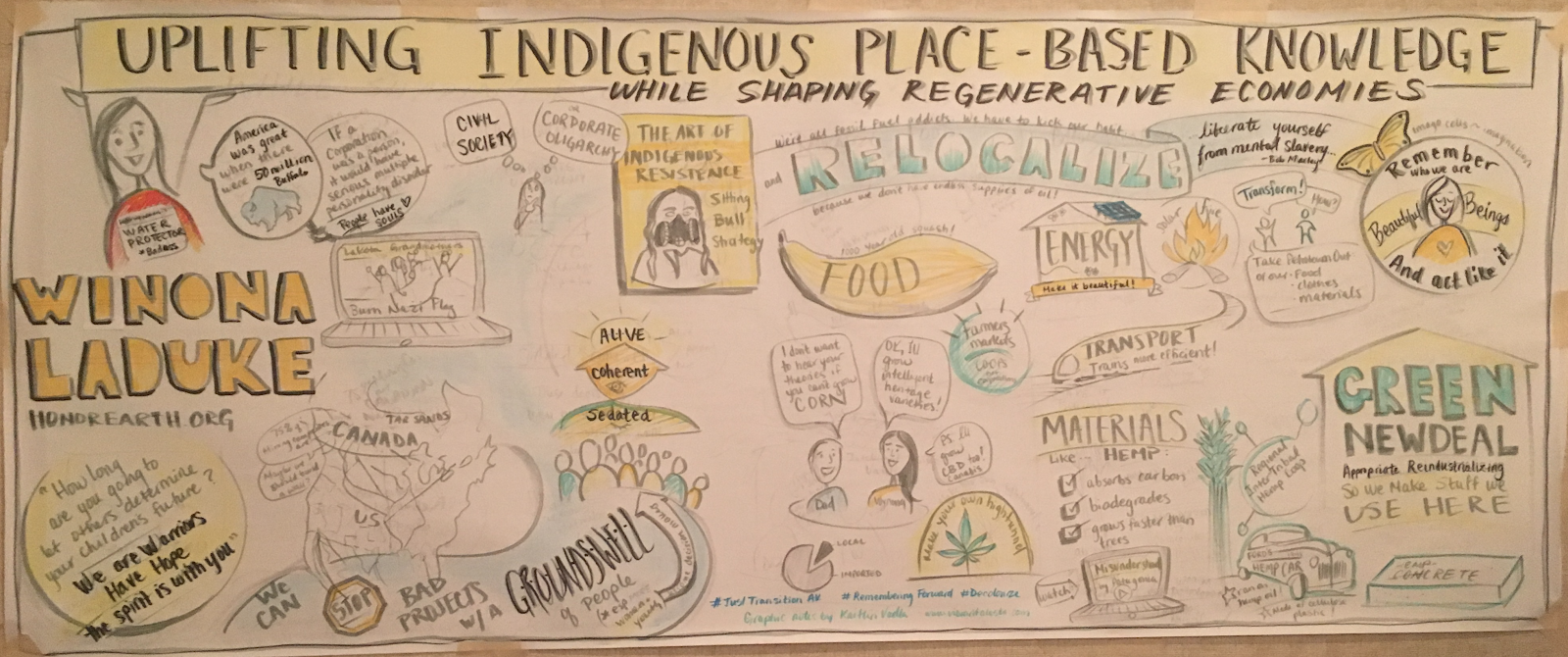
During the JT Summit’s Closing Circle focused on Art, Native Movement Regional Director Shawna Larson addressed the panel of artists, “What is art? Crayons? Paper? Paint? Stories passed on for generations? Our original instructions? Infinite knowledge?” Larson focused on two questions, 1) How can art be used to move various strategies forward in this transition? 2) How do we meaningfully and respectfully value artists and their work?
1) How can art be used to move various strategies forward in this transition?
Mural artist James Tempte, Northern Cheyene from Eastern Montana who now lives in Anchorage, answered, “The world we live in – full of data, reports, and letters to the governor – is really heady. The power of art is that it can connect to the heart in ways that all the data cannot.” The intermerging of science and art (for they are not really separate) is where the real power lies. Inletkeeper’s “Home is Where the Habitat Is” poster series depicting people and salmon sharing the landscape is a good example of an art-science collaboration.
How can we combine data and emotionally evocative images to tell powerful stories that move people to action and change the world? “Art creates a platform,” shared Tempte. From gallery exhibits to poetry slams, the media loves the arts. When you create art, many times you’ll get media attention, which is an excellent way to share your message with a wider audience and get more traction. That’s one way to involve the arts as a strategy.

2) How do we meaningfully and respectfully value artists and their work?
Artists on the panel agreed that exposure is not compensation. Compensation is nice, but that’s not what is at the heart of the artist. It’s important to give artists credit. Artists want to be part of the team and share their art. Involve artists from the beginning. If your work includes budget for “materials” or “education outreach,” these can be opportunities to bring artists into the conversation and into the strategy for change. Art can be much more than a pretty picture. It can be strategic, emotional, and activating. We like to think we’re rational, but humans base most of our actions on emotion and deeper drives.
This is why art can be so activating. A piece of art can put the spirit of a complex and little-known issue into a clarified and powerful visual message that makes people say, “YES! This is the heart of it! We’re all tied to this issue.” For example, Alaskan artist Sarah Whalen-Lunn helped elevate the crisis of Missing and Murdered Indigenous Women and Girls with her iconic artwork:

If you are involved in social and environmental justice work, you know that this work is inherently visionary and creative. No matter your medium – be it woodworking, writing, traditional craft, painting, jewelry, poetry, film, music, dance, science, religion, humor, building community, making a home, creating a family – we are all artists. And art can overcome any barrier man has yet devised. Our art is not merely decorative. It is strategic. It can transform our outrage into action and fuel powerful hope.
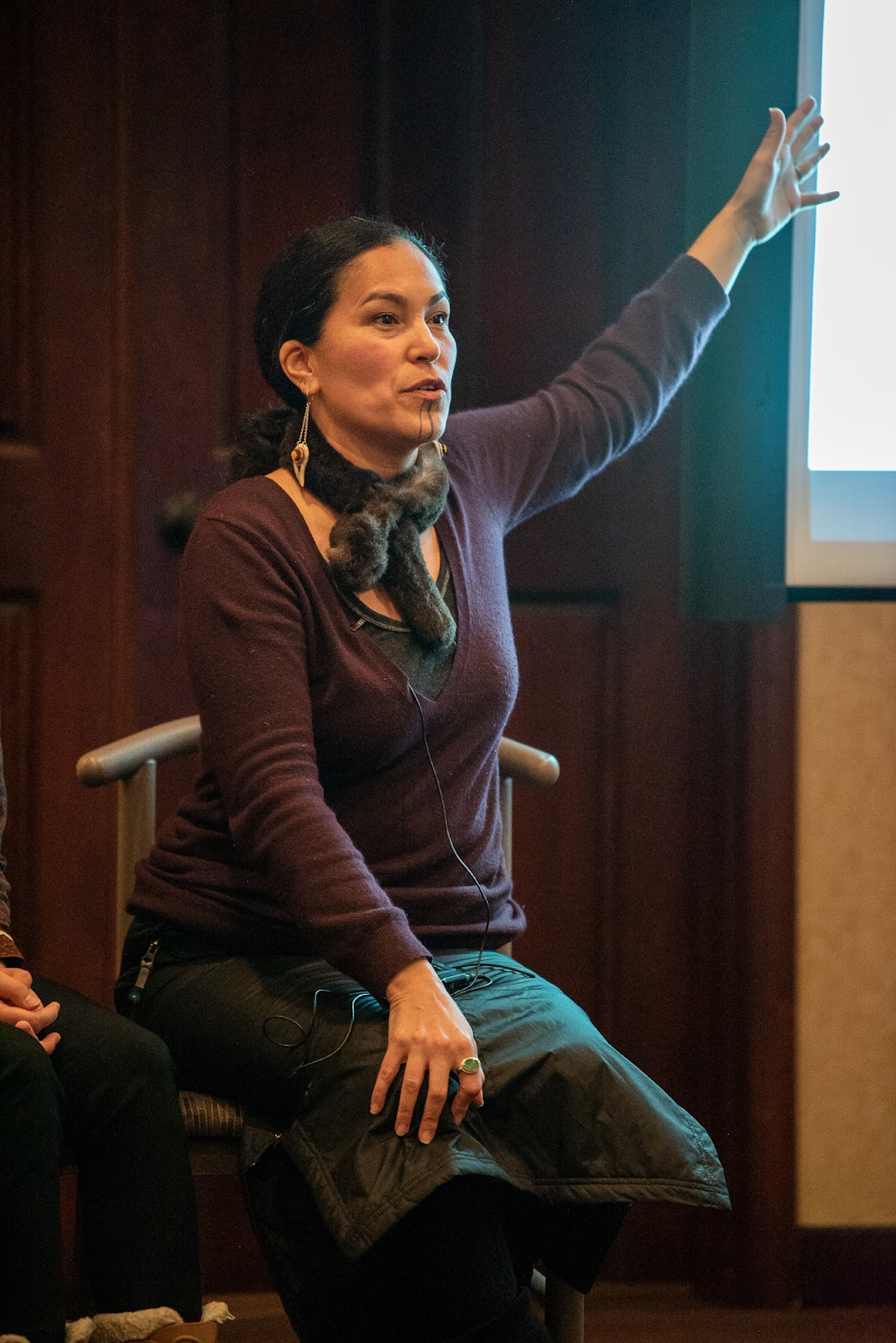
Princess Daazhraii Johnson of Fairbanks, discusses her show, Molly of Denali, at Alaska’s Just Transition Summit.