
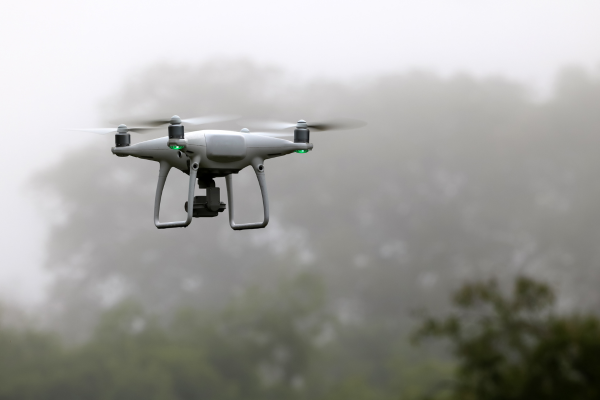
On August 23rd, a California-based engineering company called Rainmaker conducted an experiment over the lower Kenai Peninsula to test the effectiveness of its cloud-seeding technology. They flew several drones that released about 375g of silver iodide via flares overnight. The company estimates they generated 18.8 million gallons of additional precipitation based on radar data during the drizzly morning hours.
Overall, the experiment contributed less than one hundredth of an inch of additional precipitation across the region. Rainmaker has not announced any plans to operate in Alaska beyond its one-time test, conducted over the Kenai Peninsula primarily because a stable low-pressure system sat over the Gulf at the time. The direct impact of this experiment was insignificant, but it highlights several larger issues as technology develops and our climate continues to change.
Rainmaker is correct that water scarcity is a near-term crisis with global consequences. Their technology is effective, but ultimately weather modification is not a real solution to water scarcity. The amount of precipitation that these experiments generate cannot meaningfully address the imbalance of natural systems created by unchecked greenhouse gas emissions, increasing demand for fresh water, and years of first-come, first-served mismanagement.
Cloud seeding recreates natural precipitation, which forms when water vapor condenses around tiny particles of dust or ice in the atmosphere until they become too heavy to remain suspended. Silver iodide (AgI) is becoming the standard seeding particle because it is almost fully inert, and its crystalline structure is similar to atmospheric ice. The amount of AgI released by Rainmaker on August 23rd would have a negligible impact on ecology in our area.
Manually seeding precipitation, one storm at a time, is a myopic distraction from real solutions. Generating precipitation on a piecemeal basis is unlikely to achieve Rainmaker’s goals of restoring the Colorado River basin or revitalizing the Great Salt Lake. Restoring freshwater throughout a massive system like the Colorado River basin will take major change and long-term commitments equal to its size.
Indigenous Traditional Knowledge Systems form a proven roadmap to retain water and replenish aquifers worldwide. Returning to the Indigenous understanding of water as a living force invites habitat restoration and the resilience of healthy ecological systems, which buffer extremes of drought and flood.
Cloud seeding is innovative but short-sighted. It diverts energy and resources from actual solutions. Clamping down on emissions, regulating the freshwater wasted by industry, and nurturing ecosystems that naturally manage groundwater are solutions scaled to match the global danger posed by anthropogenic climate change.