
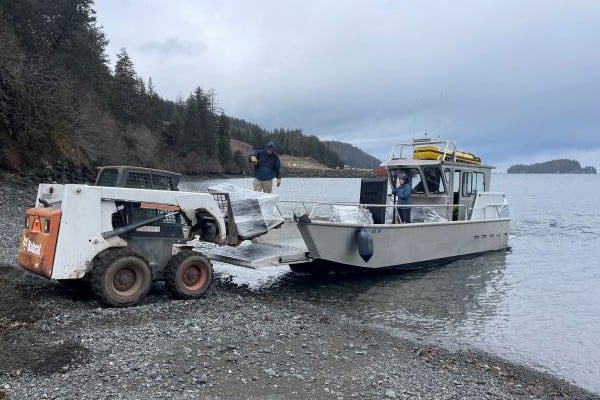
Thanks to the support of our community partners, generous donors, and the hard work of a dedicated group of volunteers, Electronics Recycling 2026 was a great success. Across the peninsula, we diverted over 36,000 lbs of electronics from our local landfills this year. Thanks to ReGroup, Sustainable Seward, and Ninilchik Health and Wellness Club, we are able to serve the communities of Kenai and Soldotna, Seward, Seldovia, Port Graham, Nanwalek, Ninilchik, and Homer. As of 2026, we have collectively diverted more than 700,000 lbs of electronics waste!
It is undeniably valuable to recycle the metals inside our old devices. The global demand for gold in industrial applications can be met through recycling, as gold is often recovered because the market prices are so high. Keeping those devices from leeching toxic material into our watershed is an even greater benefit to us all and to the salmon we eagerly await every year. The electronics we use every day contain lead, mercury, chromium, and a host of other toxic compounds, which are released when these devices are dumped in landfills.
It is simple to purchase anything we can imagine and have it delivered within a matter of days. The excitement of a new gadget can totally obscure what comes next- how do we dispose of the old one?
Luckily, many electronics manufacturers will accept disused devices that are returned to them. Apple, Canon, and Sony, among others. Similarly, some retailers, including Best Buy, Walmart, and Amazon, will take back old products. A few online retailers, such as Back Market, will even give you credit towards the purchase of a new device. Disposing of our old electronics is worth a quick web search, phone call, and a little extra effort.
We would like to extend a heartfelt thank you to our enthusiastic group of volunteers and our event partners: ReGroup, Sustainable Seward, Ninilchik Health and Wellness Center, Seldovia Village Tribe, Port Graham Village Council, Nanwalek IRA, and the Kenai Peninsula Borough.
Our electronics recycling initiative would not be possible without the generous support of TOTE Maritime, Weaver Brothers, Spenard Builders Supply, and Mako’s Water Taxi. We also thank our financial sponsors, including the Homer Foundation, Homer Real Estate, South Peninsula Hospital, Homer Veterinary Clinic, and River City Books. Most of all, thank you to everyone who dropped off their electronics at our events. Keeping hazardous waste out of our watershed is a community effort with incalculable benefits.