
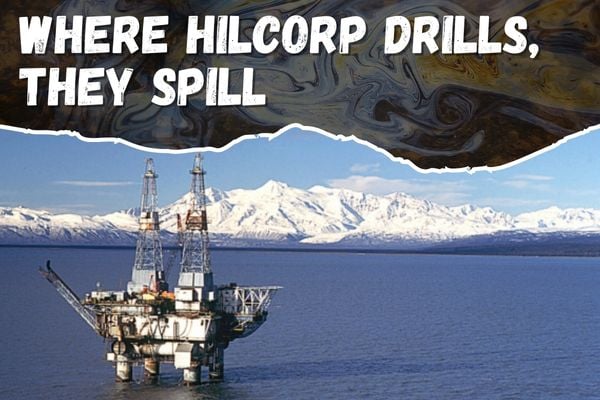
Hilcorp’s environmental and regulatory violations across Alaska have proven to be more reliable than snow in December. At the end of November, the Alaska Oil and Gas Conservation Commission (AOGCC) issued its most recent penalty against the privately owned corporation. For nearly two years of infractions at a pair of North Slope oil wells, the state agency fined the company $700,000 in a striking rebuke.
But Hilcorp’s track record makes it absolutely clear that these fines — a few barrels of oil against their pipeline of profits — are no deterrent at all.
Since Hilcorp first started working in Alaska in 2012, purchasing BP’s interests to become Alaska’s largest oil and gas operator in 2020, the agency has fined the company 20 times. Though troubling, it’s not actually that surprising: Hilcorp has a national reputation for squeezing profits out of aging oil and gas fields through barebones operations and cost-cutting, with a long record of accidents, spills, and regulatory violations.
Explaining the cause of November’s latest hefty fine, the state agency wrote, “Hilcorp’s repeated failure to comply with AOGCC rules and regulations combined with ineffective corrective actions, warrant increased civil penalties to deter similar behavior.”
Though the company’s repeated indifference to regulations can have a numbing effect, Alaskans can’t afford to accept the company’s negligence as normal. It’s been ten years since the state agency declared, “The disregard for regulatory compliance is endemic to Hilcorp’s approach to its Alaska operations.” In its 2015 reprimand of the company, AOGCC went even further, saying, “Hilcorp’s conduct is inexcusable.”
November’s penalty makes one thing clear: Hilcorp still isn’t taking the health and safety of Alaskans seriously. State fines and public scolding haven’t changed the company’s behavior, and it’s easy to see why. Penalties in the hundreds of thousands of dollars are pocket change for a corporation that has been allowed to dodge hundreds of millions in taxes.
Thanks to a tax loophole that our leaders have failed to close, Hilcorp, a privately owned company, pays no Alaska corporate income tax. Meanwhile, other oil giants like BP, ConocoPhillips, and ExxonMobil paid this tax for decades. Hilcorp gets to extract Alaska’s resources, rack up profits, and walk away without contributing income tax revenue that would be collected in almost any other state. Against that backdrop, the fines the company occasionally faces are meaningless, a mere slap on the wrist compared to the vast public wealth it’s been allowed to siphon away.
As the federal government makes new plans to open the waters of Lower Cook Inlet to a dozen offshore oil and gas leases, AOGCC’s latest bleak warning about Hilcorp’s pattern of carelessness should alarm every Alaskan. The company holds a near-monopoly over Cook Inlet gas production and was the only bidder at the most recent offshore sale in 2022, Lease Sale 258.
Inletkeeper and our allies sued to stop Lease 258 because the regulatory process failed to address the negative environmental impacts of oil and gas development, including harms to the roughly 300 critically endangered Cook Inlet beluga whales. In 2024, the court ruled in our favor. Despite that U.S. District Court decision, the Trump administration is allowing Hilcorp’s lease to move forward without any substantial changes or additional environmental safeguards, all without public input on their court-mandated Supplemental Environmental Impact Statement.
The blatant disregard for public process in Lease Sale 258 sets a dangerous precedent for future lease sales. As the Bureau of Ocean Energy Management (BOEM) readies plans to offer 5 million acres over five lease sales — stretching from the southwest side of Kodiak to nearly the mouth of the Kenai River — it’s not a question of if there will be oil spills, but when.
In the winter of 2017, a Hilcorp pipeline in Cook Inlet leaked for months after scraping a boulder on the seabed before the company could repair the hole. Two other lines were shut down for suspected leaks around the same time, and a visible oil sheen spread on the waters around a Hilcorp platform. The rough waters and harsh winters of Cook Inlet make containment or remediation of these kinds of accidents practically impossible.
There is far too much at stake for Alaskans — from commercial and subsistence fisheries to the Kenai Peninsula’s clean beaches and rivers that locals and visitors alike love — opening the door to unnecessary and potentially catastrophic risks posed by further oil and gas development.
You can share your passion for this region by submitting a public comment opposing Cook Inlet being included in the federal 5 Year Plan for offshore oil and gas development. This is a very short comment period, open only until January 23.
Here are links to talking points and more information to help you write a public comment.