
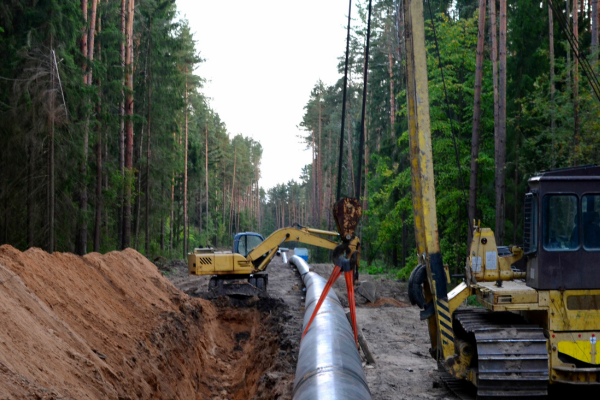
I’ve been writing heavily about the Alaska LNG project, a proposed 800-mile natural gas pipeline from the North Slope to a planned liquefaction plant and export terminal in Nikiski. All the words I’ve committed to AK LNG might seem wasted – it remains very unlikely to happen. The “Phase 1” project, which excludes the underwater pipeline across Cook Inlet and the Nikiski export terminal, claims to fix the fast-approaching natural gas shortfall in Cook Inlet. But at an estimated capital cost of $10.8 billion, it would likely struggle to beat the cost of imported LNG without a 90% break on property taxes, despite its heavy burden on state and borough services. The “Phase 2” LNG export project (under)estimated to cost $44 billion, depends on massive capital investment and finalized long-term gas purchase contracts that have yet to materialize and are still not appearing. The misleading press releases about commercial negotiations – negotiations driven not by the actual need for our gas but by the Trump administration’s attempts to bully our Asian allies into this bad investment – are not meaningful steps toward raising at least $44 billion.
Yet it isn’t safe for a climate activist to ignore the slim chance that AK LNG will defy economic sense and be forced into existence by its political boosters. Scientists calculate a “carbon budget” that the world must stay within to avoid the worst impacts of the climate crisis. The last few years of money surging into U.S. LNG blow this budget out of the water by locking in carbon emissions with multidecade gas supply contracts and massive investment in pipelines, import and export terminals, and other infrastructure. Investing in LNG is a bet on climate policy failure. AK LNG would be a significant bet.
Over AK LNG’s permitted 30-year operational life, the Federal Energy Regulatory Commission estimated it would produce 2.7 to 2.8 gigatonnes of climate pollution. The Alaska conservation scientist Rick Steiner recently calculated that all the oil and gas extracted from Alaska has released about 12 gigatonnes. So AK LNG would, all on its own, increase our historic emissions by just over a quarter in 30 years.
What about our own carbon footprint within Alaska? Based on EPA records, meeting Alaska’s in-state energy needs resulted in an average of 36.5 megatonnes of emissions per year from 2010 to 2023. Based on AK LNG’s 30-year lifetime, its annual emissions would be 90-93 megatonnes per year. If the Alaska climate movement achieved its wildest dreams of decarbonizing our energy system, the AK LNG project alone would emit 2.5 times as much as we avoided.
Merely operating the pipeline, North Slope gas treatment, and the Nikiski liquefaction terminal would emit roughly 16 megatonnes per year of climate pollution — about 4 times the contribution of every car in Alaska, as Federal Energy Regulatory Commissioner Richard Glick noted in his dissent from his agency’s permitting of AK LNG.
During AK LNG’s permitting process, federal agencies charged with assessing its impacts initially ignored the climate pollution they knew AK LNG would emit. They even said AK LNG would have a net positive effect on the climate. How? By making an unsupported and dangerous assumption that Alaskan gas exported to Asia would necessarily replace energy from burning coal or more carbon-intensive LNG. But there’s no reason to believe Alaskan gas entering a growing market wouldn’t simply add to emissions without replacing other energy sources, or that LNG sold through multi-decade contracts wouldn’t displace potential renewable energy.What we can be certain of is that AK LNG would substantially more than double Alaska’s current carbon footprint. It’s a low-probability, high-impact risk that we can’t ignore.