
From Los Angeles to Homer and Back: Across Watersheds, Against Extractivism
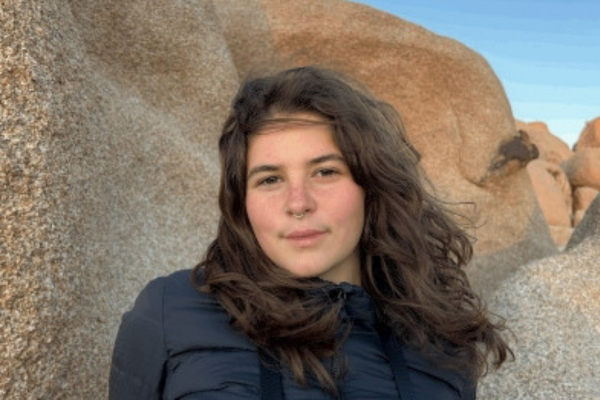
By Rosalie Deglise Moore, 2026 Climate and Clean Water Intern
Hello, all! My name is Rosalie. I am an Urban and Environmental Policy rising senior at Occidental College and Cook Inletkeeper’s Summer 2026 Climate and Clean Water Intern. I was born and raised in the unceded Tongva Lands of Los Angeles. More specifically, I was raised down the hill from the largest urban oil field in the United States: the Inglewood Oil Field. Before Hollywood, L.A. was an oil town. For over a million residents living within the Inglewood site’s boundary today, it still is.
My first protest, at five years old, was against fracking. We congregated in Downtown Culver City, and I remember shrinking back behind my mother when a counterprotester, dressed in a white bodysuit and mask, taunted the crowd. Five years later, the 2015 Santa Barbara oil spill fouled beaches all over Southern California. I remember the tar that washed ashore and stained the soles of my feet black. And across the Atlantic, it was the same story. My family, farmers in Brittany, France, since 1870, dealt with a PCB-contaminated oil spill in their primary water source. They lost livestock, struggled with toxic soil, and feared for the health of my pregnant great-aunt.
The more I looked, the more I saw the same story repeating: oil companies profiting. At the same time, communities from Los Angeles, California, to the Kenai Peninsula, Alaska, and beyond paid the price. It affects every one of us, human and non-human alike, polluting our air, soil, and water. Upon second glance, however, what caught my eye was the response to extractivist projects. I saw communities fighting back – for themselves and their progeny, for the future, and the land that sustains us all. Extractive industries are powerful, but witnessing communities’ resilience has shaped how I understand the world – and my place in it.
In this way, the oil industry has been a constant presence in my life—and because of that, it has been my through line. It shaped my daily environment, my family’s story, and my sense of justice from a very young age. It was my first disillusionment when I understood how easily money in politicians’ pockets could buy influence and power. But it was also my first call to action, the reason I began protesting, and my motivation to make positive change through transformative environmental policymaking and the climate justice movement.
It is why I am here in Homer interning for Inletkeeper now, too. Drought-ridden Los Angeles and water-rich Homer have very different socio-ecological and economic contexts, but the underlying systems of extraction—and, crucially, the actors who profit from them—are strikingly similar. Whether through corporate interests, financial institutions, or investors who benefit from resource exploitation, the rewards primarily flow to those with economic power rather than being invested in local communities. In contrast, we, as members of the affected ecological communities, see few of the benefits while shouldering the costs.
I’ve come to Inletkeeper because I want to learn and fight the fight that is felt across watersheds. I am eager to work with the Inletkeeper team and community members as we advocate for clean water, healthy ecosystems, and wildlife by saying “No” to the Johnson Tract mine and other local extractivist projects, such as AK LNG.
I am thankful for the opportunity to participate in work that helps us move away from the dominant extractive economic model towards a more regenerative one in which ecological and social well-being are prioritized. With a beautiful summer here in Homer on the horizon, full of hard work and inspiration, I am excited to bring home the lessons I will learn while at Inletkeeper.